...
Science versus Beliefs

History of Astronomical Knowledge

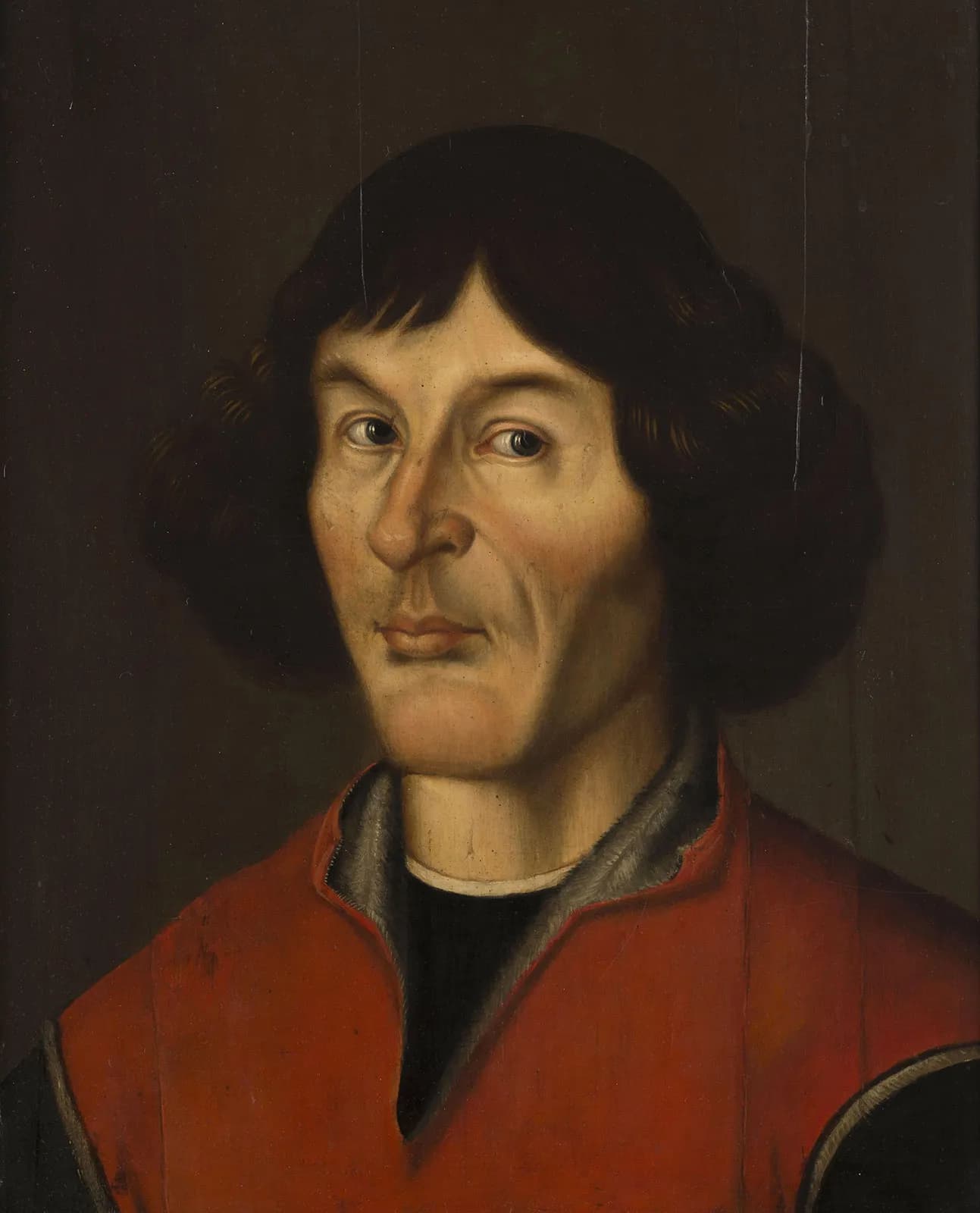
Modern astronomy truly begins with Nicolas Copernicus, who in the 16th century dared to propose that the Earth revolves around the Sun and not the reverse, thereby overturning millennia of geocentric certainties inherited from Aristotle and Ptolemy. This Copernican revolution found its continuation a century later with Galileo, who became the first to point a telescope at the sky and observe the lunar craters, the moons of Jupiter, and the phases of Venus. These discoveries provided the observational evidence missing from the heliocentric theory and demonstrated that the universe is far vaster and more complex than the ancient texts had suggested. Kepler completed this revolution by discovering that planetary orbits are elliptical, and Newton unified everything with his law of universal gravitation. In less than two centuries, humanity moved from a static, anthropocentric vision of the cosmos to a dynamic and mathematical understanding of the universe.
Caption: Nicolaus Copernicus (1473–1563)

Women in Astronomy

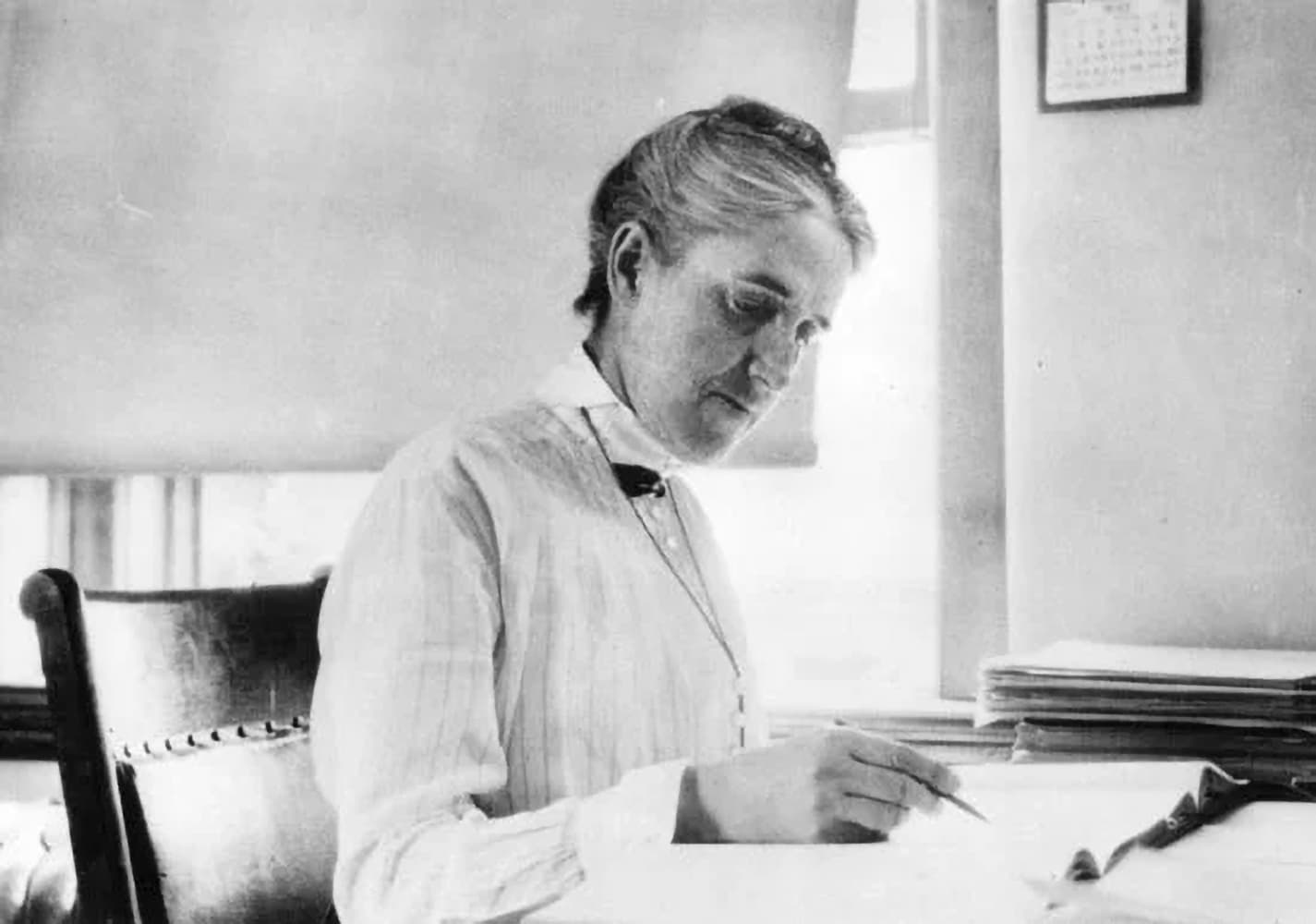
The history of astronomy has long overshadowed the remarkable contributions of women, who were frequently relegated to the shadow of their male colleagues despite their fundamental discoveries. In the 18th century, Caroline Herschel became the first professional female astronomer, discovering several comets and cataloguing thousands of stars. In the 20th century, Henrietta Swan Leavitt revolutionized our understanding of cosmic distances by discovering the period-luminosity relationship of variable stars, which allowed Hubble to measure the expansion of the universe. Cecilia Payne- Gaposchkin demonstrated that stars are primarily composed of hydrogen and helium, contradicting the prevailing theories of her time. Vera Rubin discovered dark matter by studying the rotation of galaxies. These pioneers had to overcome the systematic exclusion from universities and observatories, proving that scientific genius transcends arbitrary social barriers.
Caption: Henrietta Swan Leavitt (1868–1921). Photo by Margaret Harwood

The Church's Hold on Beliefs and Its Obstruction of Scientific Progress

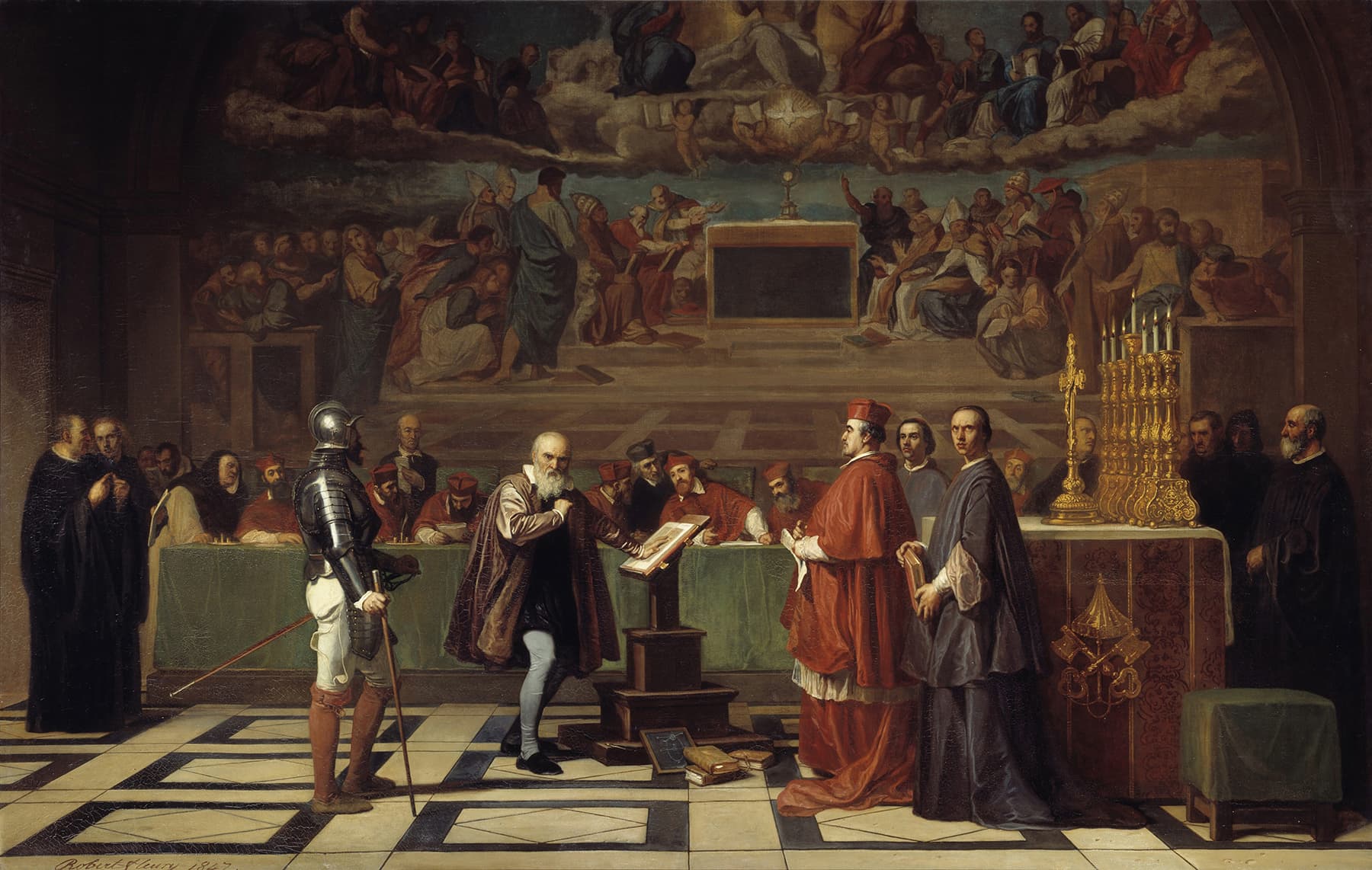
For centuries, the Catholic Church exercised strict control over European thought, imposing a worldview based on Scripture rather than empirical observation. This doctrinal grip considerably hindered the advancement of scientific knowledge, turning certain theories into heresies punishable by persecution. The trial of Galileo in 1633 perfectly illustrates this institutional resistance: forced to recant his discoveries under threat of the Inquisition, the scholar was compelled to publicly deny that the Earth revolves around the Sun. The Index Librorum Prohibitorum, the list of banned books, censored scientific works deemed contrary to official doctrine for centuries. This intellectual stranglehold considerably delayed the emancipation of rational thought in the Western world. Fortunately, the scientific method ultimately prevailed, demonstrating that the reality of the universe infinitely surpasses human dogmas, however venerable they may be.
Caption: Galileo before the Holy Office – Joseph-Nicolas Robert-Fleury
Sources
  • "De revolutionibus orbium coelestium" by Copernicus and "Dialogue Concerning the Two Chief World Systems" by Galileo
  • Research in the history of women in science (works by Margaret W. Rossiter and Londa Schiebinger)
  • Archives of the Galileo trial (Vatican, 1633) and history of the Index Librorum Prohibitorum
  • History of science and science-religion relations (works by Pierre Duhem and Alexandre Koyré)
Seraphinite AcceleratorOptimized by Seraphinite Accelerator
Turns on site high speed to be attractive for people and search engines.