...
Introduction

Pale Blue Dot by Carl Sagan

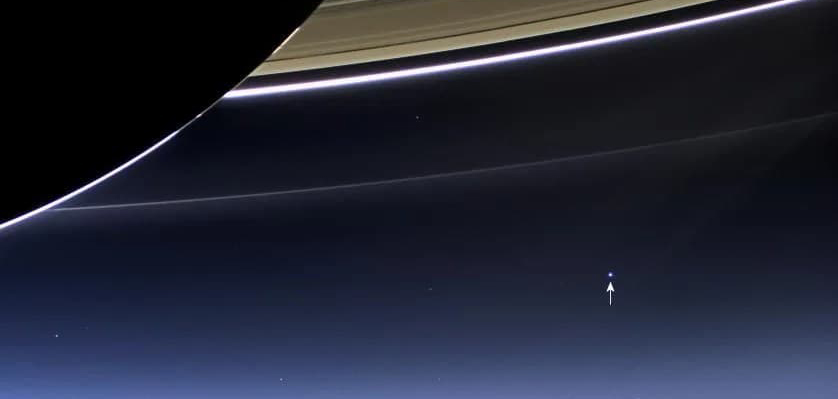
Carl Sagan’s essay “Pale Blue Dot” was inspired by an iconic photograph taken by the Voyager 1 spacecraft in 1990, showing Earth as a tiny pale blue dot suspended in the vastness of space. This image, captured from a distance of 6 billion kilometers, reveals the fragility and apparent insignificance of our planet in the context of the universe. Sagan uses this perspective to remind us that all human dramas, all our wars and conquests, take place on this speck of cosmic dust. More recently, the Cassini spacecraft offered a similar perspective in 2013, photographing Earth from Saturn’s rings, reinforcing this lesson in cosmic humility and inviting us to cherish and protect our “pale blue dot.”
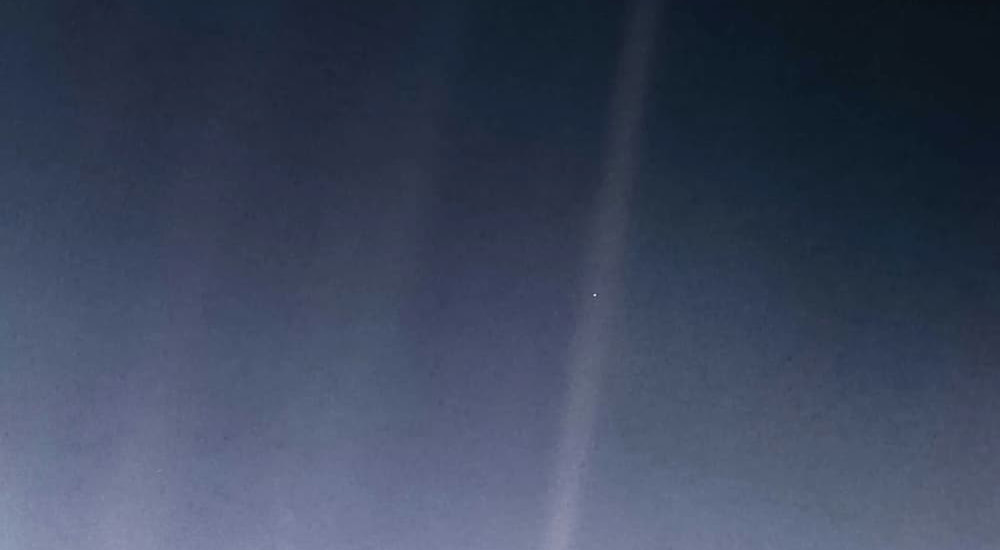
Pale Blue Dot - Voyager 1 spacecraft
Pale Blue Dot - Cassini spacecraft

Nebulae

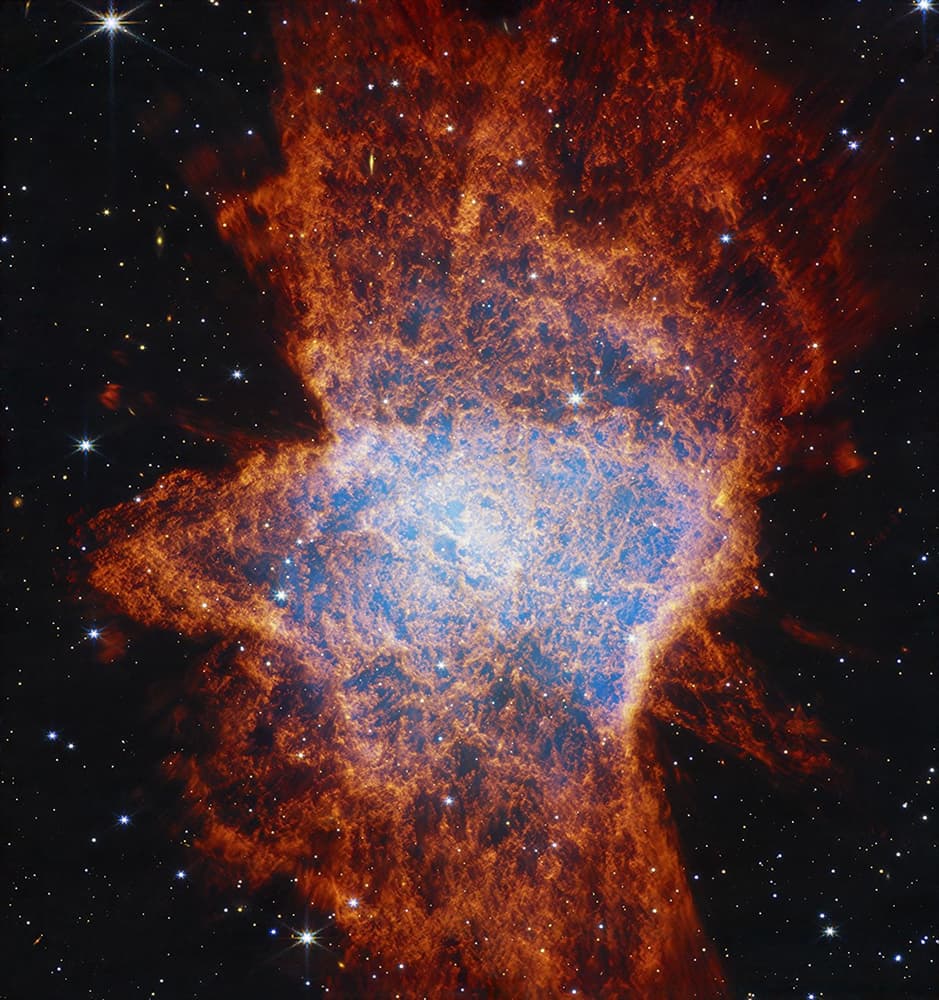
Scientifically speaking, many nebulae are vast clouds of interstellar gas and dust, composed mainly of hydrogen and helium, stretching across light-years. These cosmic structures can be illuminated by nearby stars, reflect starlight, or obscure background light. They are often the nurseries of stars, where matter condenses under the effect of gravity to form new stars. Metaphorically, the show Nebulae appropriates this notion of darkness and light mixed together to explore our existential uncertainties, our questions about our beliefs and our true position in the cosmic immensity, like these stellar clouds where new stars are born.

Planetary nebula captured by James Webb

Stellar Immensity

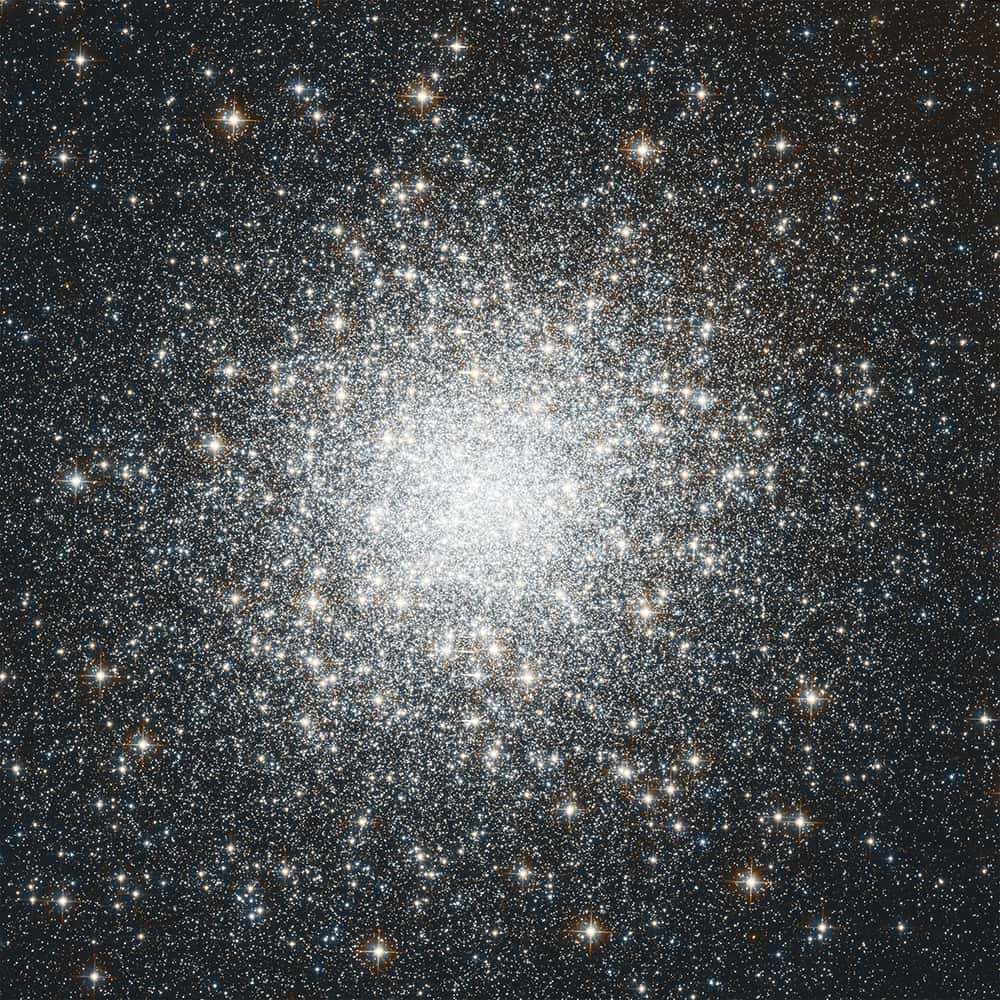
Each point of light we see in the night sky is actually a sun, often accompanied by its own planetary system, shining at unimaginable distances from Earth. Our galaxy, the Milky Way, contains approximately 100 to 400 billion stars, and the observable universe contains more than 2 trillion galaxies. This dizzying reality means that trillions of stars potentially illuminate distant worlds, each of which may harbor planets with unique characteristics. Faced with this cosmic vastness, our solar system and our Earth become infinitesimal entities in an ocean of stars and possible worlds, confronting us with the staggering scale of the universe and our modest but precious place in this immensity.
Globular cluster M2 - Hubble
Sources
  • Sagan, Carl. “Pale Blue Dot: A Vision of the Human Future in Space” (1994)
  • NASA Voyager 1 (1990) and Cassini (2013) photo archives
  • Astronomical data on nebulae and galactic structure (Hubble and Spitzer space observatories)
  • Contemporary estimates of the number of galaxies in the observable universe (James Webb Space Telescope, 2022-2023)
Seraphinite AcceleratorOptimized by Seraphinite Accelerator
Turns on site high speed to be attractive for people and search engines.