...
Anthropocentrism

Constellations and Anthropocentrism

Since the dawn of time, humanity has gazed at the starry sky and projected its own stories onto it, creating constellations in the image of its heroes, animals, and familiar objects. These arrangements of stars, with no real connection between them and separated by enormous distances, became our first tools for navigation and geographical orientation. However, this tendency to humanize the universe reveals a profound anthropocentrism: we have transformed the apparent chaos of the cosmos into coherent narratives centered on our earthly experience. The Big Dipper and Orion exist only in our imagination and change depending on our position in the universe. Ultimately, constellations tell us more about our human psychology and our need to find meaning in our surroundings than they do about the true nature of space.
Stars and constellations chart north and south pole star map - 1895

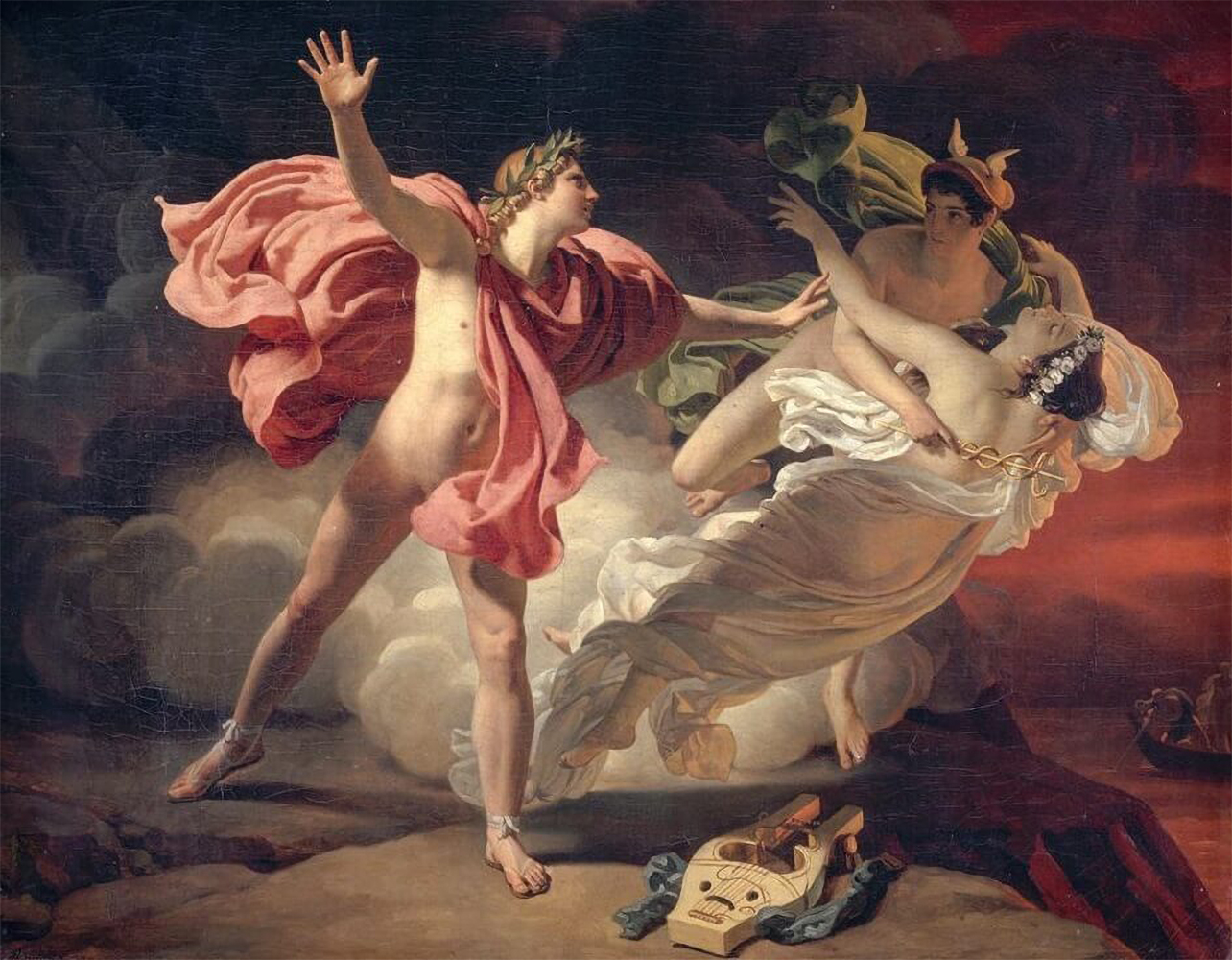
The Myth of Orpheus

The Greek myth of Orpheus tells the story of a musician whose talent was so extraordinary that he could charm wild animals, make stones weep, and even move the gods of the Underworld. When his beloved Eurydice died from a snake bite, Orpheus descended into the Underworld and, through the beauty of his music, managed to convince Hades and Persephone to return his wife to him. However, he had to agree to one condition: he must not turn around to look at her before leaving the realm of the dead. Tragically, driven by love and doubt, Orpheus turned around at the last moment and lost Eurydice forever. This myth explores the universal themes of transcendent love, the power of art in the face of death, and the human frailty that causes our noblest aspirations to fail. It illustrates the timeless truth that sometimes it is precisely our humanity that prevents us from achieving the impossible.
Orpheus and Eurydice by Michel Martin Drolling (1786–1851)

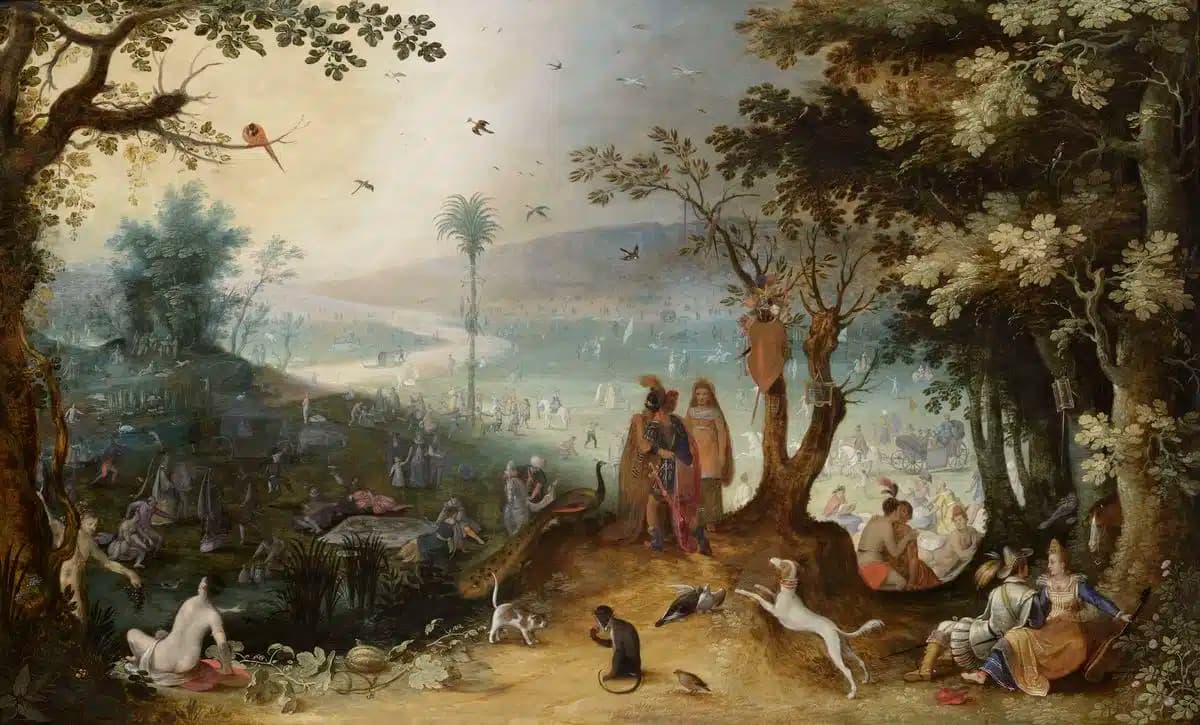
Elysian Fields

In Greek mythology, the Elysian Fields represented paradise for virtuous souls, a place of eternal happiness reserved for heroes and the righteous after their death. This concept can be considered one of the ancestors of the concept of paradise found in monotheistic religions. Unlike the dark and gloomy Underworld destined for ordinary mortals, this blessed region was described as a perpetually flower-filled meadow, bathed in soft light, where eternal spring and perfect peace reigned. The elect led an idyllic existence there, practicing their favorite activities without constraint or suffering, in a harmonious society ruled by Rhadamanthus, one of the judges of the dead. This paradisiacal vision reveals the human dream of cosmic justice, where effort and virtue would ultimately be rewarded beyond death. The Elysian Fields embody our deep aspiration to transcend the limitations and injustices of earthly existence through an idealized afterlife.
Aeneas reunited with his father on the Elysian Fields, Sébastien Vrancx (1573-1647)
Sources
  • History of astronomy and stellar cartography (work of the International Astronomical Union)
  • Ovid’s Metamorphoses and Virgil’s Georgics for the myth of Orpheus
  • Virgil’s Aeneid and Homer’s Odyssey for descriptions of the Elysian Fields
  • Studies in comparative mythology (works of Joseph Campbell and Mircea Eliade)
Seraphinite AcceleratorOptimized by Seraphinite Accelerator
Turns on site high speed to be attractive for people and search engines.